Sharia Nikah in Karachi – Nikah at Home, Office or Venue
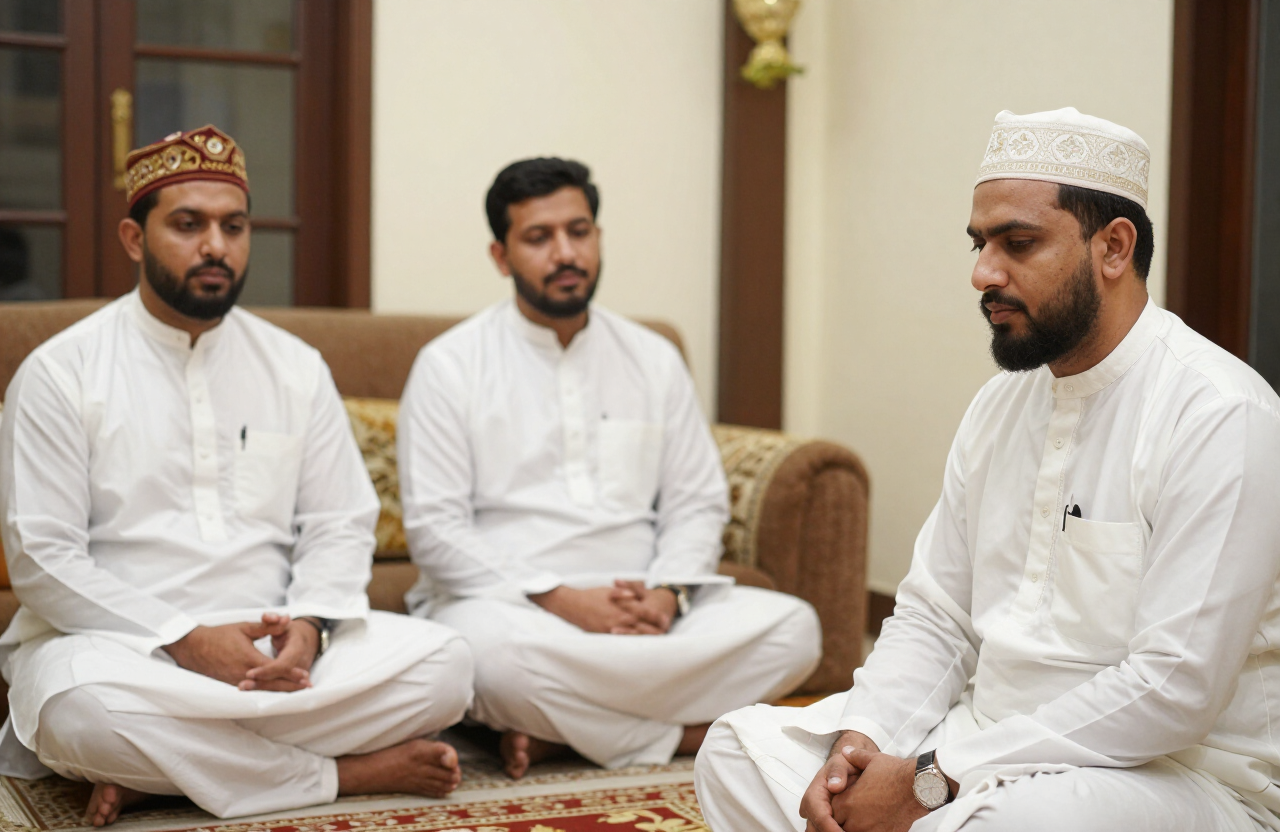
A Sharia nikah in Karachi is the Shariah-compliant marriage ceremony — the ijab-o-qabool exchanged before two adult Muslim witnesses, the Haq Mehr agreed and recorded, and the Nikah Nama completed and signed by a Nikah Khawan.
We arrange the ceremony at our Karachi office, at your home, or at a venue of your choosing — and pair the solemnisation with the legal documentation and Union Council registration that make the marriage officially recognised in Pakistan.
Quick Answer
A Sharia nikah in Karachi is solemnised by a licensed Nikah Khawan with ijab-o-qabool, two adult Muslim witnesses, Haq Mehr and a completed Nikah Nama — at our office, your home or a venue. The ceremony is distinct from statutory registration: the Nikah Nama must then be registered with the Union Council for the marriage to be officially recognised.
What a Sharia Nikah Ceremony Involves
The nikah is the Islamic marriage contract. Its generally accepted essentials are the free consent of both parties expressed through the offer and acceptance (ijab-o-qabool), two adult Muslim witnesses of sound mind, the Haq Mehr (dower) agreed and recorded, and the marriage being solemnised by a qualified Nikah Khawan. We do not issue religious rulings beyond these generally accepted requirements; for questions of fiqh specific to a school of thought, we recommend consulting a qualified Islamic scholar.
At the ceremony the Nikah Khawan conducts the ijab-o-qabool, confirms the Haq Mehr with both parties, and completes the Nikah Nama — the written marriage contract in which the parties, the mehr, the witnesses and any special conditions are recorded. The couple, the witnesses and the solemniser then sign the document.
Free Consent — Ijab-o-Qabool
Free consent is the foundation of the nikah. Both parties must enter the marriage willingly, without coercion, and declare their acceptance before the witnesses. Where the marriage is by choice — particularly against family preference — we recommend an affidavit of free will sworn before an oath commissioner, which documents that both parties married willingly and provides the strongest written protection against any later allegation of force.
Haq Mehr and the Nikah Nama
The Haq Mehr is the wife's legal right — a mandatory gift from the husband recorded in the Nikah Nama as prompt (mu'ajjal, payable on demand) and deferred (mu'wajjal, payable on dissolution or death). The figure should be agreed thoughtfully before the ceremony, because the entry has lasting legal consequences. The Nikah Nama also records the parties' identity particulars, any special conditions, the delegated-divorce column (Talaq-e-Tafweez) where used, and the witnesses' details.
The Nikah Khawan
The Nikah Khawan solemnises the ceremony — conducting the ijab-o-qabool, recording the mehr and completing the Nikah Nama. Where the solemniser is also a licensed Nikah Registrar, they carry the legal duty of submitting the Nikah Nama to the Union Council for registration. Using a licensed registrar is essential: an unlicensed solemnisation may be religiously complete but administratively orphaned, creating registration problems that surface years later in visas, inheritance and children's documentation.
Home, Office or Venue in Karachi
- Office nikah — a dignified ceremony at our Gulistan-e-Johar office in Karachi, with documentation completed on the spot
- Home nikah — the Nikah Khawan, witnesses and documentation brought to your residence anywhere in Karachi
- Venue nikah — the ceremony at a hall, mosque or chosen venue, with the solemniser and witnesses attending
- Online nikah — where a party is abroad or in another city, the ceremony by video link with a wakeel where required
The Ceremony and Statutory Registration Are Different Steps
A point that is often misunderstood: the nikah ceremony and statutory registration are separate steps. The ceremony solemnises the marriage; registration with the Union Council under the Muslim Family Laws Ordinance 1961 is what makes it officially recognised by the state — the foundation for the computerised Marriage Registration Certificate (MRC) and every later official record.
When we solemnise a marriage in Karachi, Union Council registration and the MRC application are part of the same matter — never an afterthought. A ceremony without registration leaves you without the certificate every authority asks for.
Marriage Registration Guidance for Karachi
After the ceremony the Nikah Nama is registered with the competent Union Council for the Karachi area — we coordinate with Union Councils across the city, including Gulistan-e-Johar, Gulshan-e-Iqbal, DHA, Clifton, Saddar, North Nazimabad and Korangi. The marriage is entered in the official register, and the local authority then issues the computerised MRC from NADRA-linked records. We apply for and collect the MRC on your behalf, and arrange attestation where the documents will be used abroad.
Frequently Asked Questions
Related Guides
Speak to Our Matrimonial Legal Team
Confidential consultation for court marriage, online nikah and marriage registration anywhere in Pakistan. No obligation — just clear legal guidance.
T-219, Supreme Corner, Block 18, Johar Chowrangi, Gulistan-e-Johar, Karachi